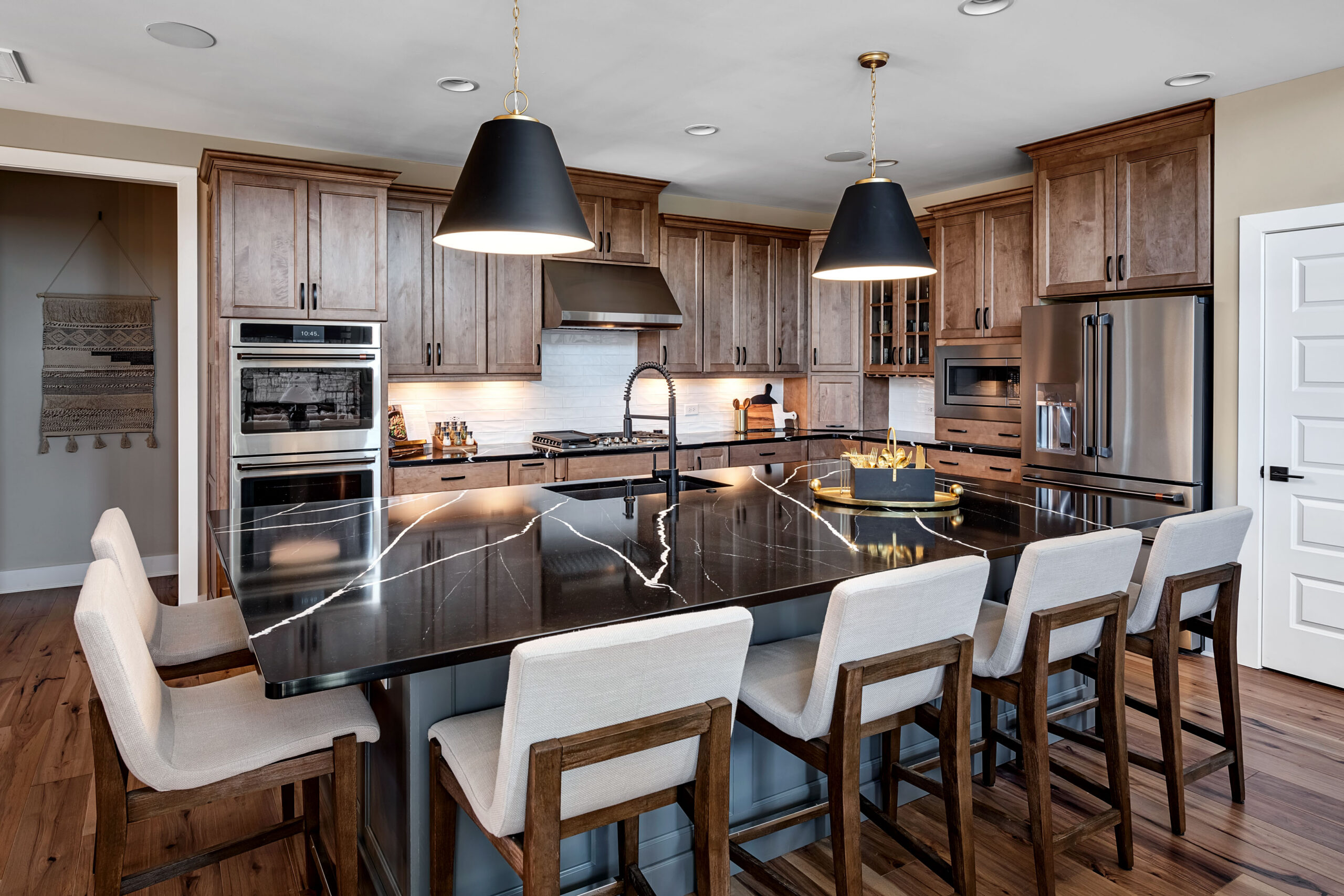
Choosing cabinetry is about more than just door styles and colors—it starts with how the cabinet box is built. Understanding framed and frameless construction helps your customers choose cabinets that fit the way they cook, live, and use their space.
What Is Framed Cabinet Construction?
In framed construction, the cabinet box has a front “frame” that outlines the opening of the cabinet. This frame supports the doors, drawers, and hardware and contributes significantly to long‑term durability.
Wellborn’s framed cabinetry uses mortise and tenon joinery in the face frame, a time‑tested woodworking method known for its strength and quality feel. The face frames are built at 1¾” thick instead of the more common 1½”, adding extra stability to the door and drawer openings and helping maintain alignment over time. The cabinet box itself features ½” thick end panels, with options in wood‑grain laminated furniture board or plywood, so customers can fine‑tune performance and budget.
Inside the cabinet, construction details are designed with installation in mind. I‑beam braces made from ½” material are dadoed and glued into the fronts, backs, and sides of the cabinet. These braces add strength, keep the box square, and double as convenient handles during installation. A captive hanging rail at the back helps prevent separation and supports secure mounting to the wall. Together, these elements deliver a cabinet that feels solid, installs cleanly, and stands up to everyday use.
What Is Frameless Cabinet Construction?
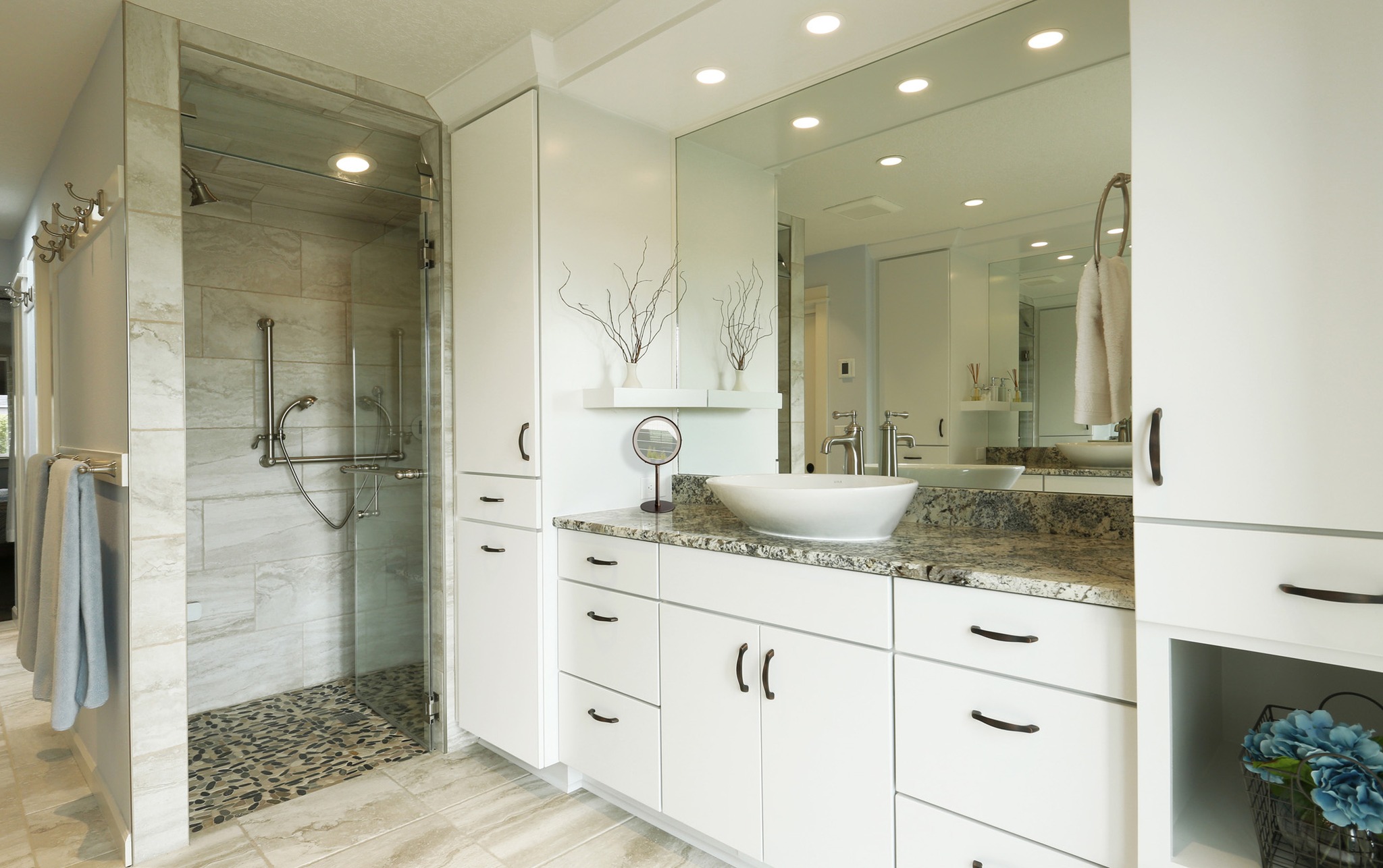
Wellborn Design Contest – Kelsey Herncjar
Frameless cabinetry—often associated with European design—eliminates the traditional face frame. Doors and drawers attach directly to the cabinet box, creating a sleek, contemporary look with full access to the interior.
Wellborn’s Aspire frameless cabinetry is engineered for strength and precision using a system of dowels that connect 3/4″ end panels to the floor, top, toe kicks, front rails, and stretcher rails. This method produces a rigid, square cabinet box that can handle heavy, frequent use. Like the I‑beams in framed cabinets, Aspire’s front and stretcher rails reinforce squareness and serve as practical handles during installation. Hanging rails at the back further simplify mounting and help keep cabinets secure.
To maintain a clean, modern aesthetic, Aspire uses high‑quality edge banding on shelves, panels, and front rails that coordinates with the exterior finish. Inside the cabinet, customers can choose from three finished interior colors—white, gray, or natural wood—to complement the overall design and elevate the look even when doors are open.
Doors, Drawers, and Material Options
Regardless of construction style, doors and drawers are the most visible and most frequently used parts of the cabinet. They must stand up to daily wear, moisture, temperature changes, and heavy use—all while reflecting each homeowner’s style.
Wellborn offers a wide range of door and drawer fronts across both framed and frameless lines. Options include:
- Solid one‑piece and five‑piece routed fiberboard doors ideal for smooth, durable painted finishes.
- Plywood veneers and solid crafted wood doors for a warm, natural look and rich grain.
- Decorative laminate veneer doors made from embossed and heavy‑textured melamine for added depth and pattern.
- Acrylic doors in high matte or high gloss for a sleek, contemporary appearance in Aspire frameless cabinetry.
These choices let customers personalize not just the construction, but also the texture, color, and overall visual impact of their cabinetry.
Pros and Cons: Framed vs. Frameless
Framed Cabinetry
Pros:
- Traditional look and feel. The visible frame suits classic, transitional, and many timeless kitchen styles.
- Added strength at the opening. The face frame helps keep doors and drawers aligned and can feel more rigid over decades of use.
- Flexible material options. ½” end panels and choices like laminated furniture board or plywood give customers control over performance and budget.
- Installer‑friendly details. I‑beam braces and captive hanging rails make installation more accurate and can reduce issues down the road.
Considerations:
- Slightly less interior access because the frame partially outlines the opening.
- In some layouts, framed cabinetry may have marginally less storage space compared to frameless.
Frameless Cabinetry
Pros:
- Clean, contemporary aesthetics. With no face frame, doors and drawers create a smooth, modern frontage ideal for minimalist or European‑inspired designs.
- Maximized interior space. Wider openings and full overlay doors can offer better access and slightly more usable storage, especially in small kitchens.
- Precision engineering. Dowel construction with 3/4″ end panels and coordinated edge banding delivers a refined, high‑end feel.
- Expanded style options. Textured melamine, decorative laminates, and acrylics in matte or gloss open the door to bold, modern looks.
Considerations:
- Frameless construction often works best when installation is highly precise, which means experienced installers are especially important.
- The modern aesthetic may not align with every home’s architecture or a client’s preference for more traditional details.
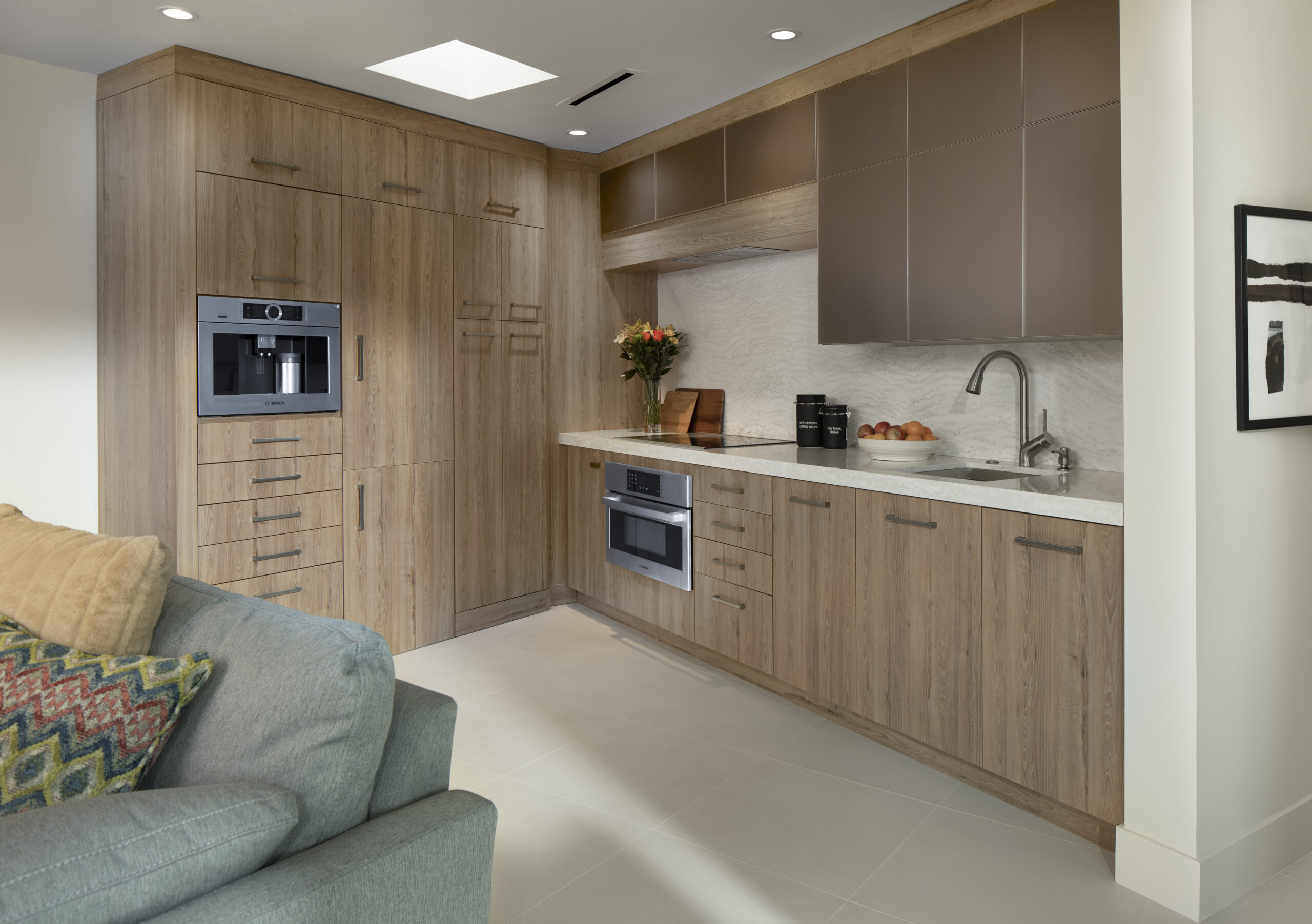
Elite Cabinet Designs: Helping You Choose the Right Cabinet Construction
At Elite Cabinet Designs, we start every project by getting to know how you live, cook, and gather in your home. We don’t just ask what style you like—we listen for what matters most day‑to‑day so we can guide you toward the cabinet construction that truly fits your lifestyle.
- Style Preference. When style is the priority, we look at whether you’re drawn to classic, warm, or transitional kitchens, where framed cabinetry often feels more familiar and timeless, or whether you prefer sleek, minimal, and European‑inspired spaces, where frameless lines like Aspire deliver that clean, modern look. We use real samples, finish options, and design boards to help you see how each construction supports your aesthetic.
- Space and storage are part of every conversation. In tighter kitchens or projects where every inch counts, frameless cabinetry can provide more accessible openings and a bit more usable storage. In larger kitchens, or when you want that substantial, traditional presence, framed construction often takes priority. We walk you through layout, appliance placement, and traffic patterns so the choice supports both beauty and function.
- Budget and materials are discussed transparently from the start. Because both framed and frameless systems offer different material options—like laminated furniture board and plywood for framed, or melamine and acrylic for frameless—we help you mix and match components in a way that balances performance, durability, and overall investment. Our goal is to show you where to splurge, where to save, and how to get the most value from your cabinetry.
- Installation and Longevity. We also talk about installation and longevity, especially for clients planning a “forever kitchen.” Our team explains how specific engineering details—such as enhanced bracing, precision joinery, and reinforced hanging systems—support cabinet squareness, strength, and reliable installation over time. Understanding these behind‑the‑scenes features helps you feel confident that your kitchen will look aligned, feel solid, and function smoothly for years.
Ultimately, Elite Cabinet Designs believes the “best” construction is the one that fits your lifestyle, design vision, and budget—and gives you peace of mind that your cabinetry is backed by quality craftsmanship designed for real life at home.
If you’re ready to explore framed and frameless options for your next kitchen or bath, contact Elite Cabinet Designs today to schedule a design consultation and let us help you choose the perfect cabinetry for your space. Call 850-502-4957 to find out which cabinets are best for your home.



Leave A Comment